Bringing Acupuncture Home: Indigenous Healers Train to Serve Their Communities
This is a subtitle for your new post
For three days, a group of Indigenous students has been learning a small but powerful form of care: five-needle auricular acupuncture, a protocol used since the 1970s to treat substance misuse and trauma.
The training is partially funded by scholarships made possible through a grant from Health First Foundation. Indigenous students, most of whom live in or near reservation communities, make up a large part of the training class. After finishing, graduates take an online exam to become state-certified acupuncture technicians who can offer the protocol themselves.
“They are going to bring it back to their communities to use however they want to,” said Dr. Nox Chetcuti, Stuck founder and CEO. Many participants already work with elders and youth, she said. One runs a Navajo mountain biking organization for young people. Their reach matters most in places without consistent care. “The powerful care [is] provided by people that understand your life, understand your community, and live in these areas with you,” Chetcuti said.
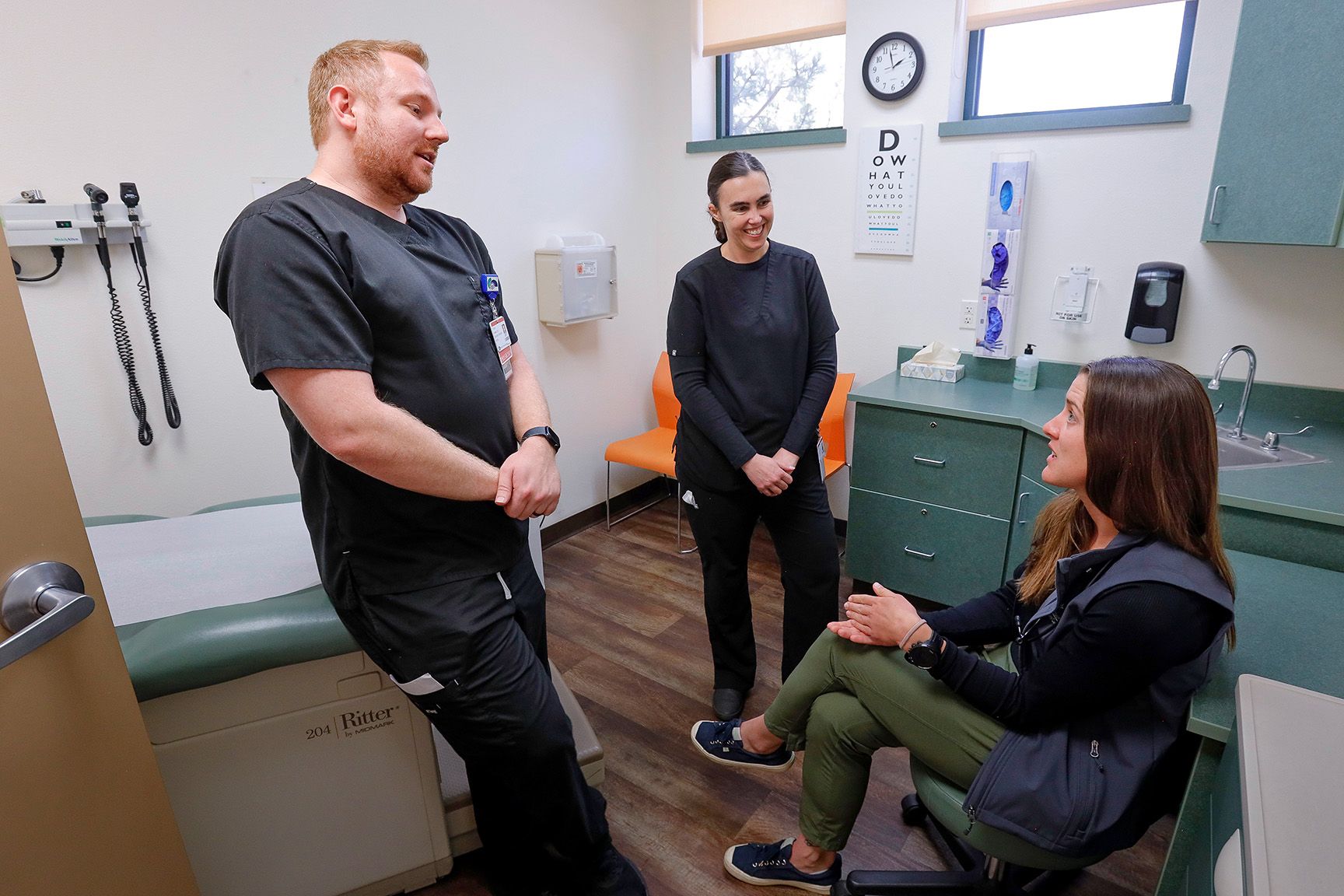
For student Valine, the training is personal. She first encountered acupuncture as a patient at NACA’s behavioral health center while dealing with postpartum depression and anxiety. Now she is on the other side of the table.
Once certified, she plans to volunteer with a local acupuncture program to build experience. She is also part of a recovery court program and is from the Navajo Nation, and she intends to carry the services there. “Mainly elders and children, of course, and people that are in recovery,” she said. “It’s something that needs to be taken out onto the reservation.”
Valine described her approach as holistic, and that fits the model the training is built on: care delivered by neighbors, relatives, and fellow community members who already know the people they serve.
Stories